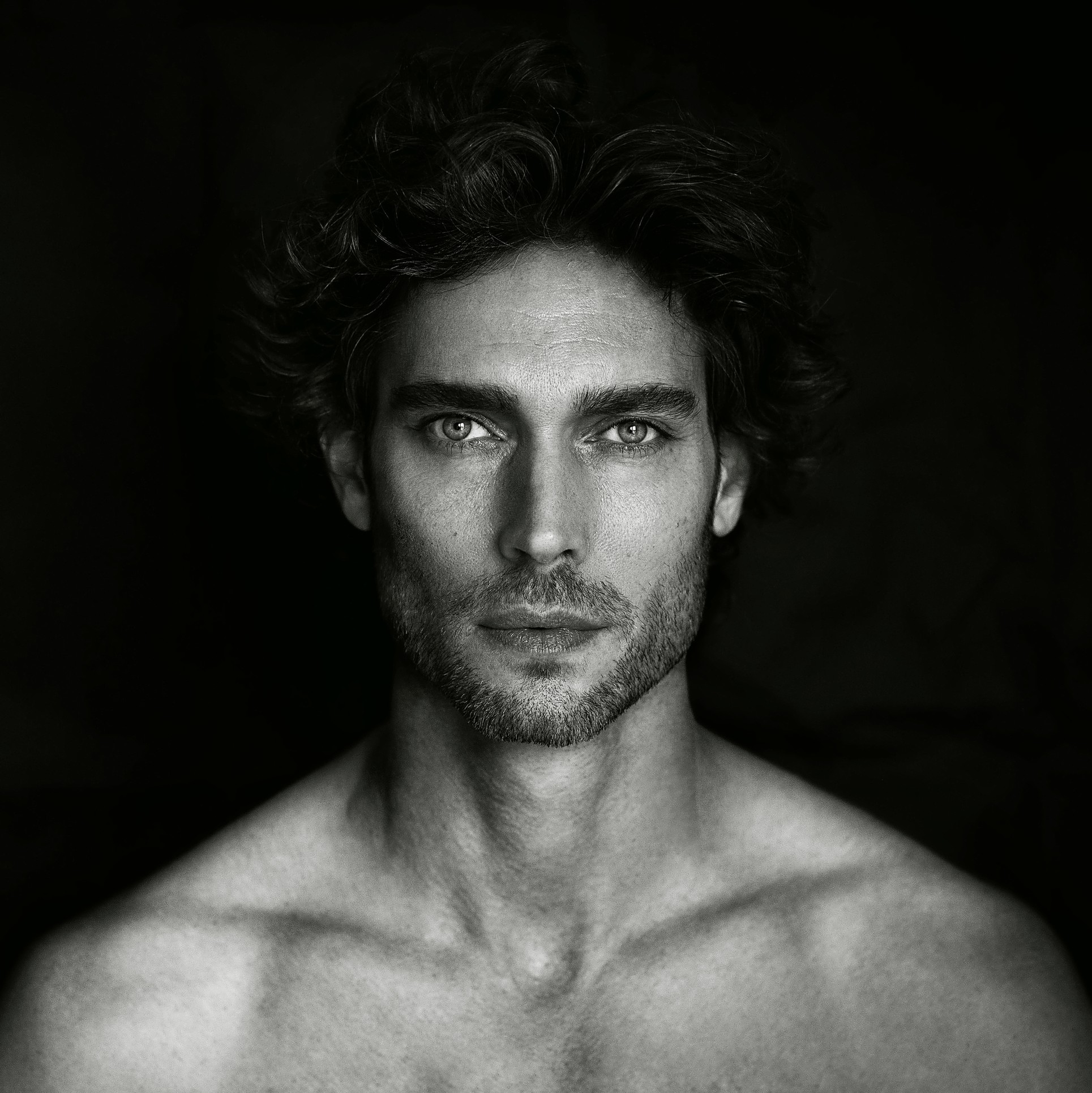
I am from a town of 216 people on the South Plains of Texas. The big claims to fame in our area were Buddy Holly, from Lubbock, and Waylon Jennings, from Littlefield. We had oil, cattle, cotton, football, livestock shows, Route 66 and sandstorms. My graduating class had twelve people in it.
I drove a tractor at eight. By twelve, most kids I knew were driving farm trucks into town when something was needed. Nobody in that part of Texas thought much about it either way.
By fifteen, I had taken the reins of the family kennel training border collies for the sheep, the kind of work that requires more patience and communication than most adults ever develop with other humans. A working dog can be fifty yards away and moving faster than you can, so a late or unclear signal becomes your mistake before it becomes the dog's.
I got respected and trusted enough at the dog training (thanks to some great dogs) that I was invited to give a demonstration and a talk at a farmers and ranchers convention in New Mexico that year. Several hundred adults showed up. The Q&A ran long because the questions kept coming, a few orders were taken for puppies afterward, and they handed me a check at the end of it.
It was the first time I had ever spoken in front of a crowd. It was the first time I had ever been paid to do it.
It was also the first time I had driven across a state line alone, which was not entirely legal given that I did not technically have a license, but I had been driving farm equipment and trucks for work since I was eight and, again, nobody in that part of Texas thought much about it either way.
My first car was a white 1990 5.0 Mustang.
By seventeen I had leased my own land, borrowed my father's equipment to go along with his advice, and was farming it with my brothers. Small profits, but ours. I kept working it through the summer sessions at South Plains College and into my time at West Texas A&M, alongside a part-time valet job at the cancer hospital that kept ready cash in my pocket while the bigger things sorted themselves out.
I studied history, political science and philosophy. I read constantly, more often found in a library than anywhere else. Books opened the world before the world opened itself.
The plan, as far as I could see it from that flat stretch of West Texas, was straightforward: finish university, CLEP out of as many classes as possible to save time and money, play football, get the law degree from UT, go into politics.
I did not like the way the world was being run. Things seemed broken. I wanted to understand why, and I wanted to do something about it. So, among other things at university, I worked with the College Republicans, where I got to see what a real political campaign looked like. I helped out with Governor Bush and Senator Gramm.
I also began learning that politics might not be the way things really change.
Something had happened before college started, though. I had been scouted in a livestock ring while showing sheep and told about this thing called modeling. I did not think that much of it at first. I already had a plan, but like the old joke goes, "You know how to make God laugh? Make a plan."
I CLEP'd out of everything I could, took the maximum hours allowed across both summer sessions at South Plains College, finished a fall semester at West Texas A&M, and went to New York City for the first time just before Christmas. I made it through one more semester in Texas, then returned to New York the following summer.
The new plan was to really try this modeling thing, since it seemed to be going well, make enough money to pay for the rest of university, and be done with it in two years. I needed the money, and I was disillusioned enough with my political experience at that point, so why not give it the old college try?
You know how to make God laugh, right?
Make a plan.
That started in 1995, got serious in 1996 and was full-time by 1997.
Thirty-one years later, I am still at it.
Almost immediately I was working with some of the biggest brands and photographers in the world: Greg Kadel, Mert Alas and Marcus Piggott, Ellen von Unwerth, Mario Sorrenti, Greg Gorman, Francisco Scavullo, Hiro, Aldo Fallai, Nathaniel Goldberg, Tom Munro, Andreas Ortner and others, shooting campaigns for Guess Jeans, Valentino, Salvatore Ferragamo, Bulgari, Roberto Cavalli, Hugo Boss, Armani and Kenneth Cole, appearing in commercials, music videos and art projects that ran globally.
I have lived, while always maintaining a base in New York, in Sydney, London, Barcelona, Paris and Munich, and spent more time in Milan than I can count. Not as a tourist passing through, but as someone who paid rent, learned the rhythms, understood which conversations happen over espresso in Milan and which ones happen over dinner in Paris and why the difference matters.
I have worked in 92 countries and counting.
All of it from that small town in West Texas, where the biggest events were Friday night lights and preparing for livestock shows and rodeos, and nobody had yet told me any of this was possible.
Compressed into a paragraph, it sounds glamorous.
Sometimes it was, and is.
Mostly it is just work.
What most people miss about sustaining a career like that for more than three decades is what it actually requires. Sure, you have to be a bit lucky to get the chance to start, but luck will not keep you working for decades.
At the top of the industry, especially over a long period of time, every room is international, every relationship is load-bearing, every conversation happens across languages and cultural registers, and the difference between someone who lasts a season and someone who builds a career is almost entirely judgment, discipline, and the ability to read what a situation actually needs rather than what it appears to need.
You arrive in a city you do not know, walk into an agency, a casting, a campaign set or a showroom filled with people who may not share a language, a culture, an assumption about time, or even the same understanding of what the job is, and you have to understand what is happening before you make yourself part of it.
Who needs to lead? Who needs room? What is the client not saying? When does a disagreement matter? When does an ego simply need somewhere safe to land? When do you speak, when do you shut up, and how do you make the work more important than winning the room?
It took me longer than it should have to understand that this was the actual education.
The work has taken different forms. The underlying skill has remained the same.
Depending on the room, people have called it modeling, writing, creative direction, consulting, partnerships, ecosystem work, operating, or public speaking. Looking back, I have had a surprising number of titles and much the same job: understand the people, the system and the stakes well enough to help something useful happen.
The work happening behind the photographs
Modeling was the visible career. It was never the only career.
For most of those thirty-one years there was something else happening beside it, usually in hotel rooms and airport lounges, in rented apartments, or on laptops balanced on knees after long days on set.
I wrote for fashion and literary magazines throughout the late nineties and early two-thousands under pen names. Not because I was hiding anything, but because the industry at that level for a long time actively discouraged models from having visible outside interests. There was a strange idea that needing or wanting to do something besides modeling somehow diminished the modeling.
I was not willing to stop writing.
So I changed the name on the page instead.
I finished my first complete novel, Michael, in 2003, writing it over four years while traveling. I negotiated a publishing deal. I signed a contract I should not have signed, handed over the rights, and watched the manuscript disappear into a holding company that acquires books on the possibility of one day turning them into something else.
It is still there.
I have made peace with that, mostly.
I kept writing anyway.
In 2002, while shooting campaigns and traveling, I co-founded a bicycle store in Lubbock, Texas, and ran it for five years. Road cycling had already become a constant, my way of tuning the rest of the world out for a few hours and coming back to myself, so owning a bike shop seemed perfectly sensible at the time.
(There were, as it turns out, easier ways to relax.)
It taught me the unromantic parts of running a real business: inventory, margins, customers, staff, cash flow, repairs, ordering, and the fact that the thing somebody needs is almost always the one part you forgot to order.
From 2012 to 2014, I rebuilt the operational infrastructure of Yale Moyer Lighting, a very high-end landscape lighting company whose client list read a little like the Forbes rich list. We had concurrent projects in logistically difficult places like Mustique, along with work all over Long Island, Europe, the Bahamas, you name it. Revamping payroll systems, supplier ordering, installation coordination and the supply chain while that was all moving at once was no small thing. It was the kind of work nobody notices when everything works and everybody notices immediately when it does not.
Much of it was coordinated remotely between modeling jobs.
Complexity does not care where you are sitting when you work through it.
In 2015, Filmatography, a UK and Dubai-based production company, commissioned me to write a made-for-streaming television series. I spent the next two years writing Oasis Bound, an ensemble drama about a group of people in Dubai who all have public reasons for being there and private ones they have not earned the right to know about each other yet.
Ambition, loyalty, betrayal, love, status, secrets, and whether people who have very good reasons not to trust one another can choose to anyway.
At the time I thought I was writing a television drama.
In retrospect, I was still working on the same question.
When AI was still a workshop
In 2016 and 2017 I worked with ECSI Consulting on early applied artificial intelligence for fashion and luxury.
This was before ChatGPT made AI something everyone had an opinion about.
We were looking at what machine learning and better use of data could actually do inside businesses: geographic and demand forecasting, overproduction, customer data, physical retail, e-commerce, marketing, supply chains, and the enormous amount of information fashion companies were already collecting without necessarily knowing what to do with it.
The useful part was not saying AI would change everything. Lots of people could say that.
The useful part was sitting between people who understood the technology and people who understood fashion, luxury, customers, brands and operations, and making sure neither side designed a future that made perfect sense only to itself.
There is a pattern there that I did not fully see yet.
Fashion had already taught me how to walk into rooms that did not share a language. AI taught me that the same problem existed between disciplines. A brilliant engineer and a brilliant creative director can be looking at exactly the same business and not actually be talking about the same thing.
Someone has to notice.
That work changed the kinds of problems I started looking for.
Not long after, I co-founded Dropclub.io, working on blockchain provenance connecting physical art and assets with digital ownership records before NFTs became something everyone also had an opinion about.
Again, the technology was interesting.
The question underneath it was more interesting.
If an object, a claim, a transaction or a person moves across distance, what information follows it? What can be verified? What has been lost? What do we still have to take on somebody else's word?
The work continued through creative direction and brand strategy with Beyond Design Agency, bringing together writing, brand work, production, technology and the practical translation between creative and commercial teams. That work has included luxury and founder-led businesses, including creative and brand work around names such as Davidoff and Bulgari.
The subjects kept changing.
I kept finding myself in the middle.
Writing, systems and the road toward Ethereum
The writing never stopped either.
I became a contributing editor at IRK Magazine, writing across fashion, culture, sustainability and technology. It gave me a public home for work I had often done privately, including Living with Blockchain, a series of conversations with people building Ethereum, identity, public goods and decentralized systems.
By then I had spent decades moving between industries that thought they had little to do with one another.
Fashion. Writing. Retail. Production. AI. Supply chains. Sustainability. Blockchain.
From the outside, it probably looked like several different careers running at once.
It never felt that way from inside them.
Every one of those rooms had people who knew one part of the problem extremely well, people with different incentives trying to cooperate, information that had to move without losing its meaning, and relationships that either carried the work or quietly broke it.
Ethereum gave me a new place to examine something I had apparently been studying for a very long time.
How do people who do not know one another coordinate?
What can they rely on?
What should have to be trusted, what can be inspected instead, and where does the vulnerability move when we redesign the system?
I did not arrive in Ethereum because I was looking for a new career.
I recognized the problem.
Ethereum made the old question visible
By 2021, several of the threads I had been running in parallel began pulling toward the same place.
I co-founded WeTryBetter, a Texas-registered 501(c)(3) nonprofit working around environmental action, sustainability and the circular economy because sustainability has never made much sense to me as an abstraction. At some point somebody has to actually do the thing.
JERRI followed as a Web3-native creative and membership project, combining art, identity, community and some of the questions I had already been asking about what makes people belong to something and what that belonging should actually mean.
Around those projects I found myself deeper inside ReFi, Ethereum public goods, DAOs and founder communities. I mentored founders through the ReFi Talents program at the Frankfurt School Blockchain Center, worked with people trying to connect sustainability and real-world projects to new forms of funding and governance, and increasingly occupied the space between people who understood the technology and people who had to decide whether any of it was useful.
That became much of my Web3 work.
Sometimes it was called partnerships. Sometimes ecosystem development, strategy, consulting, founder support or institutional development. In practice, it usually meant sitting somewhere between founders, protocols, investors, institutions, public-goods communities and real-world businesses, understanding what each side actually needed and finding the point where a conversation could become something concrete.
At Viridis, that meant working between green-tech companies, founders, investors and Web3 systems, trying to understand where blockchain, governance, funding and coordination tools genuinely helped and where calling something Web3 did not magically make it better.
Later, at Octant, it meant working on institutional and ecosystem development around Ethereum-native public-goods funding from August 2025 through January 2026.
An elegant onchain funding mechanism eventually meets an institution with custody requirements, risk committees, boards, lawyers and people whose job is quite literally to ask what can go wrong. Both sides can be right about the problem and still fail to understand one another well enough to move.
That difficult middle is usually where I am most useful.
ETHis, an Ethereum Community Conference, brought much of that work into a physical room. As a core contributor, I worked across partnerships and the ecosystem around ETHis, and in July 2026 we brought Ethereum builders, researchers, institutions, founders, public-goods participants, policymakers and people working on real-world adoption into the Deutsches Museum in Munich.
Getting different people into the same building is an event problem.
Giving them a reason to understand why they are there together, and what none of them can accomplish alone, is something else.
I have spent a long time working on the something else.
Writing the thing I had been practicing
Eventually, I had to write it down.
The Truth About Trust began because I kept watching the word trust used to mean almost anything: reputation, transparency, compliance, verification, obedience, familiarity, belief.
Technology companies promised to remove it.
Institutions promised to manufacture it.
Marketing departments asked for more of it.
None of those explanations survived contact with the life I had actually lived.
Trust, as I have come to understand it, is willingly accepted vulnerability in the presence of risk.
It is not the absence of risk. Quite the opposite.
It is the moment one person, group or institution chooses to rely on another while knowing there is something to lose.
Technology can move that vulnerability. It can reduce parts of it, make things inspectable that were previously hidden, distribute responsibility differently, or give us better ways to walk away when the relationship stops holding.
It cannot make the human problem disappear.
The first essays in The Truth About Trust series are now published, with the rest of the series and a book growing from the same body of work. The essays are the most explicit version of something that took decades to become clear to me, but the fundamentals did not suddenly appear when I started writing about them.
I can see the pieces all the way back.
A border collie working fifty yards away from me when I was fifteen.
A photographer trusting a crew that had never worked together before.
A client trusting that the campaign would come back with what had been promised.
A bike-shop customer leaving a machine worth thousands of dollars in our hands.
A writer signing the wrong contract.
A company trusting a model built from data it does not entirely understand.
A founder trying to explain something nobody has a category for yet.
An institution deciding whether an onchain system is safe enough to touch.
The pattern became visible slowly.
Maybe that is the only way important patterns ever do.
Still working
I am still a working model.
I still write.
I still work with founders and institutions, creative teams, technologists and decentralized communities. I still speak publicly, although it has been a very long road from that first room of farmers and ranchers in New Mexico.
I work between Europe and the United States, most often from southern Germany, and I am usually happiest somewhere in the middle of a problem where everybody involved knows a great deal about their own part and not quite enough about one another's.
The different doors on this site exist because people arrive for different reasons.
A modeling agent does not need the same page as an Ethereum foundation. A reader does not need the same thing as a founder looking for help. A conference organizer should not have to sort through thirty-one years of photographs to find a speaking topic. Someone interested in my writing may have absolutely no desire to understand DeFi custody.
Fair enough.
This site holds all of it because it was never really separate. It just appeared that way out of necessity for a long time.
One person, learning one thing, in as many rooms as he could get into.
The circle, in Japanese, is an Ensō. You draw it in a single brushstroke, and whatever comes out is what was in you at that moment. The imperfection is not a flaw. It is the record.
The line gets thinner. The hand wobbles. Sometimes the circle closes, sometimes it does not.
I started in a livestock ring in West Texas wanting to change the world, took a thirty-one-year detour through more countries than I can count and a dozen parallel lives, and arrived, somehow, at work that is still trying to answer versions of the question I started with.
I thought that meant politics.
Life gave me sheepdogs, fashion, books, bicycles, businesses, AI, films, blockchains, public goods, some mistakes expensive enough to remember, and more rooms than I could have imagined existed.
I am still trying to understand what makes the useful things hold.
The brushstroke is never finished.
Ask Iris if you want to reach me. She will carry it. There is also info@donnylewis.com, which I read when I can.